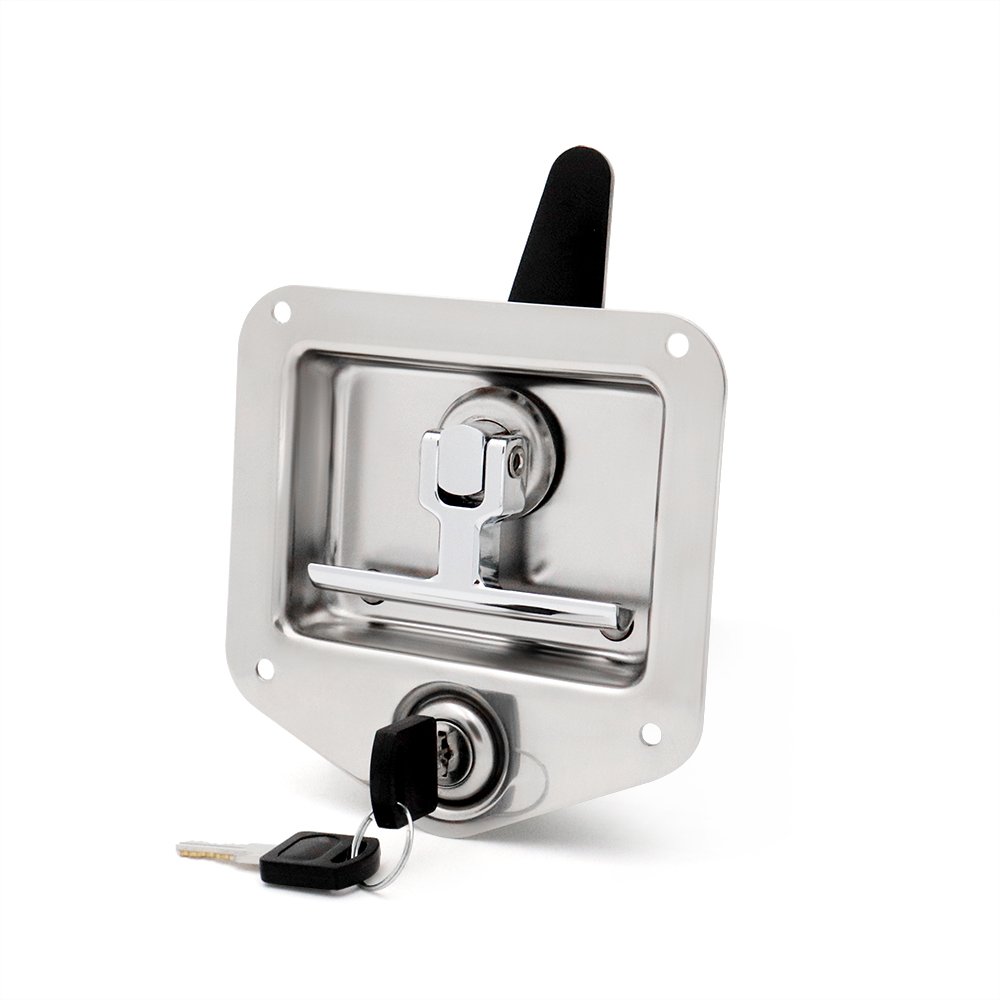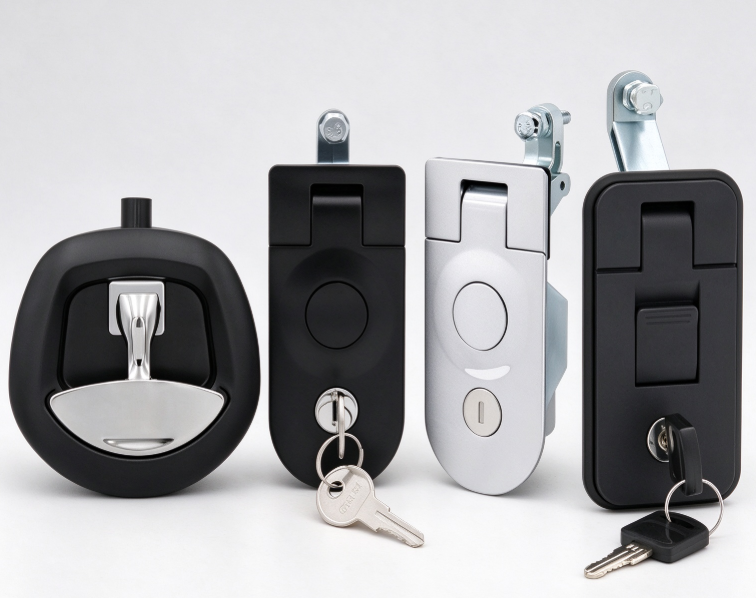
Choosing the right toolbox locks is essential for manufacturers, distributors, and OEM buyers who want to build reliable storage products. The right lock should match the toolbox design, provide suitable security, resist corrosion, and withstand repeated use.
However, not every locking mechanism works for every application. A compact cam lock may be ideal for a small storage compartment, while a whale tail lock or compression latch may be better suited to an outdoor toolbox or vehicle storage system.
In this guide, we explain the main types of toolbox locks and six key factors to consider before selecting hardware for your next project.
Key Takeaways
- Choose the right lock type: Cam locks suit compact compartments, while paddle locks, T-handle locks, and whale tail locks are commonly used in larger storage applications.
- Check mounting compatibility: Verify cutout dimensions, panel thickness, hole spacing, and latch travel before ordering.
- Consider the environment: Outdoor and vehicle-mounted toolboxes need appropriate corrosion resistance and vibration performance.
- Evaluate security requirements: Select the locking mechanism and keying system according to the value of the stored equipment and access requirements.
- Test before bulk production: Check samples for fit, smooth operation, durability, and finish consistency.
- Choose a suitable supplier: For OEM projects, confirm customization options, quality control, and production lead times.
1. Why You Need Toolbox Locks to Protect Your Tools
A toolbox is only as secure as its lock. The right locking hardware controls who can access the valuable tools kept inside, keeping possession firmly with the intended user. Many standard canopies and storage boxes come fitted with simple, basic locks by default, yet these entry-level options have clear limits.
Basic locks may keep wildlife such as bears or wild boars out when toolboxes sit at remote outdoor worksites. But they offer little defence against human intruders. Thieves can quickly pick weak locks and steal costly hand tools, diagnostic instruments and precision components stored inside.
Beyond theft prevention, a robust lock also delivers meaningful benefits for your toolbox product. It adds real perceived value, helping your product stand apart from cheaper alternatives on the market. A well-built lock also cuts down on after-sales headaches: flimsy hardware that jams, corrodes or breaks will trigger returns and harm your brand reputation. Many industrial sites also mandate locked tool storage, so reliable locks help your customers satisfy worksite safety rules.
2. The Range of Toolbox Locks: What Options Are Available
Multiple locking solutions are widely used for toolbox and canopy projects. Common selections include padlocks, cam locks, tubular locks, paddle latches, compression locks, whale tail latches. Each option serves distinct use cases and budget tiers, so your product roadmap and target application will guide your hardware selection.
Padlocks: Typically manufactured from stainless steel. Extremely versatile and simple to integrate onto most toolbox and canopy openings. They deliver strong cut and pick resistance with minimal installation requirements. Best suited for projects where you want flexible, add-on security.
Cam Locks: Simple, low-cost mechanical mechanisms commonly fitted to light-duty tool drawers and compact storage compartments. While widely adopted for basic storage, they offer limited pry and tamper resistance. They work well for indoor, low-risk environments. For toolboxes deployed regularly on outdoor job sites, you should consider upgrading to a more secure alternative.
Tubular Locks: Offer much higher pick resistance than standard cam locks with a compact cylinder design. Though their security performance is strong, they are not purpose-engineered for toolbox applications. They can be adapted, yet other lock styles are often a more practical fit for your toolbox product line.
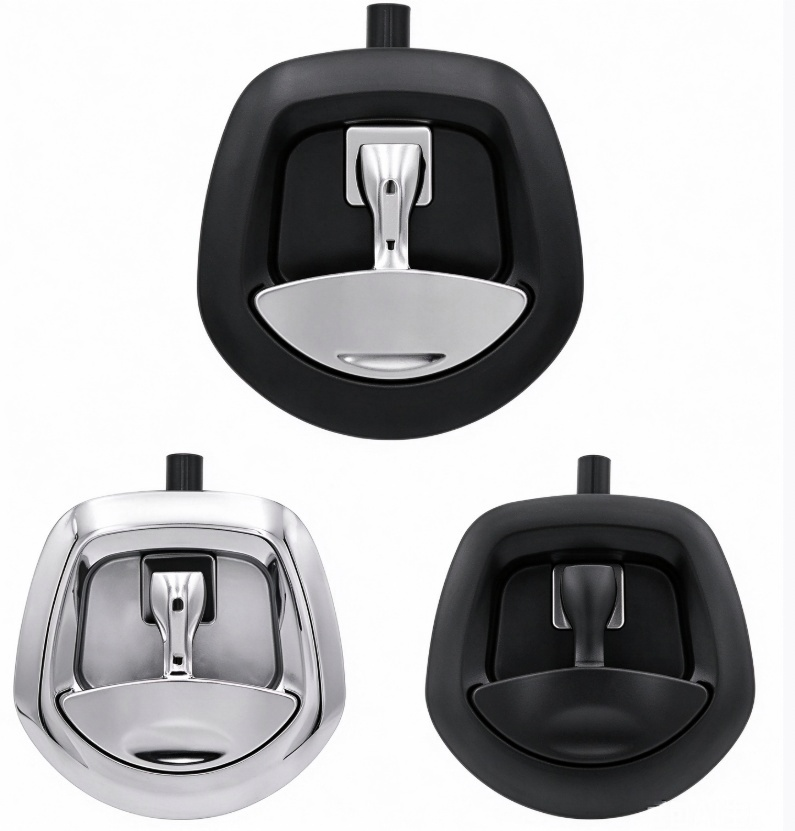
Paddle / T-handle Latches: Heavy-duty rotary locks designed for large truck toolbox lids. Built to withstand continuous vibration from moving vehicles, making them ideal for outdoor jobsite boxes.
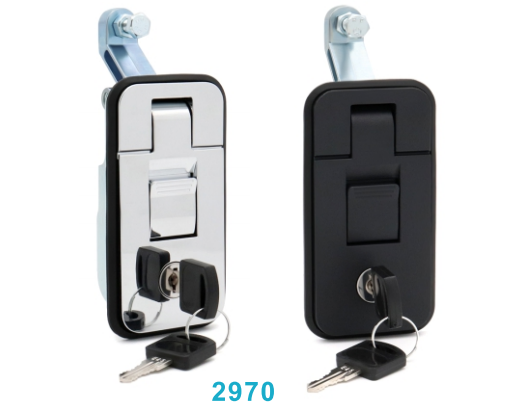
Compression Lock: Designed to seal toolboxes and storage canopies tightly while accommodating minor panel misalignment. The integrated cushion seal blocks dust, moisture and debris ingress, protecting stored contents in harsh outdoor working conditions.
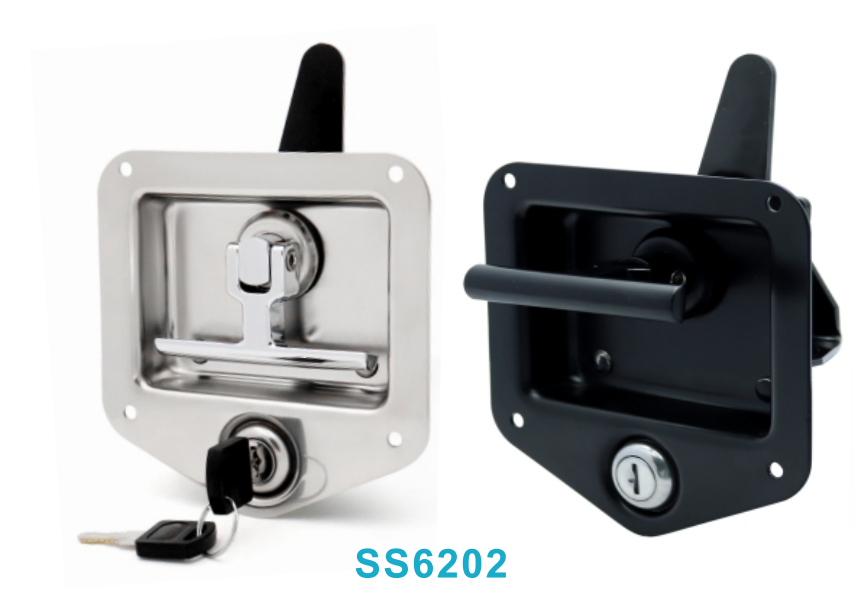
Whale tail lock: A highly practical option for mobile toolbox and canopy builds. It is key-lockable and accepts secondary padlock reinforcement for layered security. Pre-drilled mounting holes simplify on-line assembly. Constructed from zinc alloy, it delivers robust durability, stable performance across high and low temperature ranges, and passes rigorous salt spray testing to withstand harsh outdoor conditions.
3. Functional Factors to Evaluate When Selecting Toolbox Locks
When you compare suppliers and shortlist toolbox locks, do not only look at unit price. Evaluate these functional criteria to avoid costly mistakes after mass production.
1) Material & Corrosion Resistance
The working environment is your first filter. Indoor workshop use allows zinc alloy locks with standard plating. If your toolboxes will be fitted on trucks, RVs or used in coastal/humid job sites, you need locks with strong anti-corrosion treatment. Zinc alloy lock bodies with pearl chrome, matte chrome or powder coating are common choices. For extreme salt-spray environments, 304 stainless steel construction is recommended. Always ask suppliers for salt spray test reports before bulk orders.
2) Mounting Compatibility
Check cutout dimensions, hole spacing, panel thickness range and latch stroke. The lock must fit your toolbox panel without rework. If you are upgrading an existing toolbox model, confirm the mounting footprint matches your current cutout to avoid mould modification costs. Light colour customisation is also a plus if you want the lock finish to match your toolbox housing for premium visual appeal.
3) Security & Keying Management
Define your security level. Basic cam locks work for low-risk indoor storage, while whale tail locks are better for high-value tool storage. Also decide keying strategy:
- Keyed Different: Every lock uses a unique key, best for individual toolboxes.
- Keyed Alike: Multiple locks share the same key, convenient for users owning several tool chests.
4) Durability & Cycle Life
Industrial toolboxes see frequent opening and closing. Confirm the lock’s rated operation cycles. Reliable toolbox locks should pass thousands of open-close cycles without jamming, spring fatigue or loose buttons. Vibration resistance is critical for vehicle-mounted toolboxes; locks must not unlock accidentally during transportation.
5) Installation & Assembly Efficiency
For mass production, simple installation reduces your assembly labour cost. Whale tail locks, T-handle locks and compression locks are designed for fast fitting on production lines. Avoid overly complicated lock structures that slow down your toolbox assembly.
6) Supply & Customisation Capability
When sourcing hardware, verify if your supplier can support lightweight customisation: custom surface finishes, logo marking, minor dimensional tweaks and consistent batch colour control. Stable lead time and consistent quality across batches are essential for your production scheduling.
4. Ready to Pick the Right Toolbox Lock for Your Toolboxes?
Selecting toolbox locks is a balance of security, material performance, mounting compatibility, total cost and market positioning. Start by mapping out your end user’s working environment, security requirements and product grade. Then narrow down lock types, verify material testing data and confirm sample performance before committing to bulk orders.
Whether you are designing a new toolbox model, replacing existing hardware or sourcing locks for your product line, choosing a hardware partner who understands OEM product development and offers flexible light customisation will streamline your product development and reduce risk.
FAQs
What is the best type of lock for a toolbox?
The best lock depends on the toolbox design, security requirements, and operating environment. Cam locks may suit small compartments, while paddle, T-handle, compression, and whale tail locks may be more suitable for specific vehicle storage or outdoor applications.
How do I choose a replacement toolbox lock?
Measure the mounting cutout, hole spacing, panel thickness, and available internal clearance. Also check the cam or latch dimensions and the required locking movement before ordering a replacement.
Which material is suitable for outdoor toolbox locks?
The appropriate material depends on exposure to rain, humidity, road salt, and other environmental conditions. Zinc alloy with a suitable protective finish or stainless steel may be appropriate in different applications. Confirm the material specifications and relevant corrosion-test results before purchase.
Can toolbox locks be customized for OEM projects?
Customization depends on the supplier and product design. Possible options may include dimensions, finishes, keying arrangements, and mounting configurations. Confirm the available options, minimum order quantity, and sample process with the supplier.
What should I check before placing a bulk order?
Confirm the technical drawing, mounting dimensions, material and finish, keying requirements, sample performance, quality standards, and delivery schedule. Approving a representative sample before mass production can help reduce compatibility and quality risks.
Need Help Selecting Toolbox Locks for Your Project?
Choosing the right toolbox lock starts with understanding your application and technical requirements.
Contact Kinntoo to discuss your project, review suitable locking options, and explore customization possibilities for your toolbox or vehicle storage design.
Ready to discuss your requirements? Contact our team to get started.