

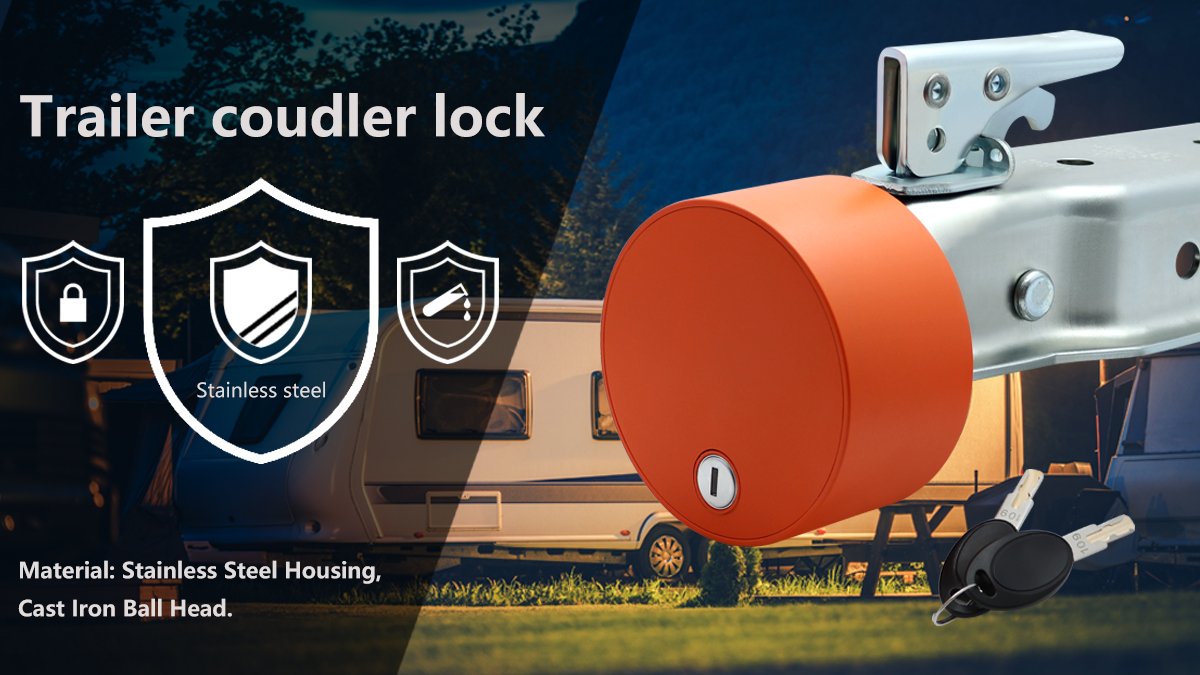
You rely on a heavy duty trailer lock to protect your trailer from theft and unauthorized access. Thieves often target trailers because they are easy to tow away if left unsecured. Different lock types serve specific purposes. For example, receiver locks secure the ball mount while towing, while coupler locks prevent someone from attaching your trailer to another vehicle when parked.
Lock Type | Primary Use | What It Secures |
|---|---|---|
Receiver Lock | While Towing | Secures the ball mount inside your vehicle’s receiver |
Coupler Lock | While Parked/Stored | Prevents a thief from hooking your trailer to their truck |
Consider the type of trailer you own and your daily routine before choosing a lock.
Key Takeaways
Choose the right lock type based on your trailer and usage. Coupler locks prevent unauthorized towing, while receiver locks secure the hitch connection.
Using multiple lock types enhances security. Combine coupler locks, wheel locks, and hitch locks to create a strong defense against theft.
Regular maintenance is key. Clean and lubricate your locks every few months to ensure they work smoothly and effectively.
Invest in high-quality materials. Locks made from hardened steel or zinc alloy resist cutting and tampering, providing better protection for your trailer.
Consider additional security measures. Use GPS trackers, surveillance signs, and physical barriers to further deter thieves and protect your trailer.
Heavy Duty Trailer Lock Types
When you want to secure your trailer, you have several types of heavy duty trailer lock options. Each type serves a unique purpose and fits different security needs. Understanding these lock types helps you choose the right protection for your trailer.
Tip: Using more than one lock type increases your trailer’s security and deters thieves.
Coupler Locks
Coupler locks protect your trailer when it is not attached to a vehicle. You install them over the coupler, blocking anyone from hitching your trailer to their own vehicle. These locks create a strong physical barrier and act as a visible warning to potential thieves.
Type of Coupler Lock | Description |
|---|---|
Coupler Locks | Prevent unauthorized towing by securing the coupler to the vehicle. |
Pin-style coupler locks | Affordable and easy to use, they deter thieves with a visible locking pin. |
Enclosed box locks | Cover the entire coupler, making it difficult to cut or tamper with. |
Coupler locks prevent unauthorized hitching of trailers.
They provide a visible deterrent to potential thieves.
Different types offer varying levels of security.
Lock Type | Function | Security Level |
|---|---|---|
Coupler Locks | Prevent unauthorized access to the trailer’s coupler mechanism | Strong physical barrier when unhitched |
Receiver Locks
Receiver locks secure the connection between your vehicle and the trailer’s hitch. You use them while towing. These locks replace the standard hitch pin with a lockable pin, making it impossible to remove the hitch ball mount without a key.
Pin-style hitch locks replace standard hitch pins with lockable versions.
Deadbolt-style locks use internal locking bars to resist prying and pulling.
Right-angle locks fit tight spaces and block tool access from certain angles.
Adapter sleeves let one lock fit multiple hitch sizes.
Keyed-alike locks allow you to use one key for several locks.
Receiver locks prevent the hitch ball mount from being removed from your vehicle’s receiver. This ensures that your trailer stays attached and secure when you leave your vehicle unattended.
Hitch Locks (Including kinntoo RV Hitch Locks)
Hitch locks offer another layer of security for your trailer. These locks secure the hitch connection, making it difficult for anyone to detach your trailer from your vehicle or attach it to another vehicle. High-quality hitch locks use hardened steel, aluminum, or stainless steel for extra strength and resistance to cutting or rust.
Kinntoo specializes in precision-engineered RV hitch locks. These locks feature durable construction, secure locking mechanisms, and user-friendly designs. You can install and remove them quickly, which is ideal if you travel often. Kinntoo RV hitch locks fit common coupler sizes and withstand harsh weather, making them a trusted choice for RV owners and fleet operators.
Type of Lock | Description |
|---|---|
Coupler Locks | Prevent a trailer from being coupled to a hitch ball, securing the coupler. |
Receiver Locks | Secure the connection between the hitch receiver and the trailer hitch. |
Wheel Locks | Immobilize the trailer’s wheels, preventing movement or towing. |
Kinntoo RV hitch locks provide strong protection against theft by adding layers of security that deter thieves and make trailers less attractive targets.
Wheel Locks
Wheel locks clamp onto your trailer’s wheels and prevent them from turning. You use wheel locks when your trailer is parked for long periods, such as at construction sites, storage yards, or in your driveway. These locks act as a strong visual deterrent and make it nearly impossible to tow the trailer away.
Wheel locks are effective in preventing theft, especially when combined with other locks.
Their effectiveness depends on the quality and fit of the lock.
Highly visible wheel locks make your trailer less appealing to thieves.
Use wheel locks for long-term parking or storage.
Door and Hasp Locks
Door and hasp locks protect the doors and compartments on your trailer. You use them to secure entry points, storage areas, and toolboxes. These locks resist bolt cutters, saws, and pry bars, making it difficult for thieves to break in.
Lock Type | Security Function |
|---|---|
Trailer Padlocks | Secure the hasp, latch, or handle on doors; resist bolt cutters and saws. |
Hasp Locks | Serve as anchor points for padlocks; minimize exposed hardware and resist pry bar attacks. |
General Lock Benefits | Provide visible deterrence, delay physical attacks, and enhance response time for law enforcement. |
Padlocks and Chain Locks
Padlocks and chain locks give you flexible security options. You can use them to secure gates, doors, or even anchor your trailer to a fixed object. Heavy-duty padlocks with shrouded shackles resist bolt cutters, while hardened steel chains are tough to cut.
Heavy-duty padlocks and industrial chains are essential for securing trailers, especially in high-risk areas. The best combinations use shrouded shackles and through-hardened chains. Always anchor chains through solid points on the trailer frame or storage yard for maximum security.
Using a variety of security devices, such as coupler locks, ball hitch locks, and wheel locks, alongside chains, significantly deters theft and enhances trailer protection.
Seal Guards and Enclosed Locks
Seal guards and enclosed locks protect cargo seals and locking mechanisms from tampering. These locks cover the latch or seal, making it hard for thieves to access or break them. They are especially useful for commercial trailers that carry valuable goods.
Advantage | Description |
|---|---|
Enhanced Protection | Provides a strong deterrent against tampering and unauthorized access. |
Reduced Load Refusals | Maintains seal integrity to avoid rejections at distribution centers. |
Improved Brand Reputation | Demonstrates proactive security measures, building trust with shippers and insurers. |
Note: Seal guards and enclosed locks help maintain the integrity of your cargo and protect your business reputation.
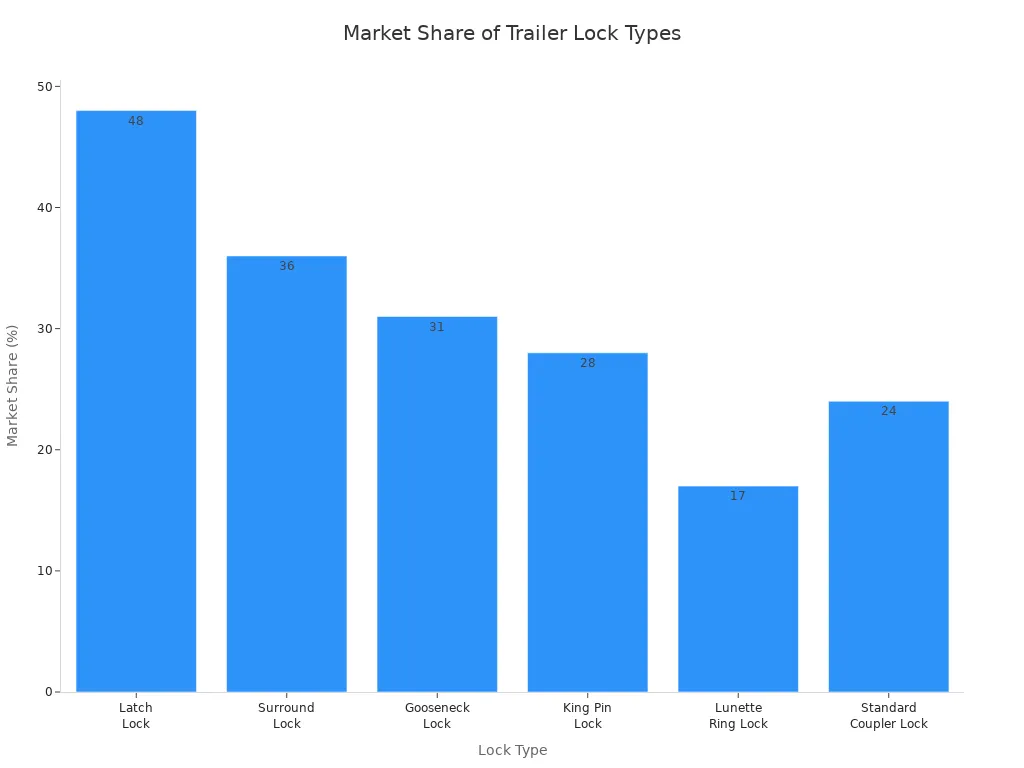
You can see from the chart that latch locks and surround locks hold the largest market share. Gooseneck, king pin, and lunette ring locks serve specialized needs in agriculture, logistics, and industrial settings. Standard coupler locks remain popular for consumer-grade trailers due to their ease of use and affordability.
Choosing the right heavy duty trailer lock depends on your trailer type, storage location, and how often you use your trailer. By understanding each lock’s function, you can build a layered security system that keeps your trailer safe.
How Heavy Duty Trailer Locks Work
Locking Mechanisms
You need to understand how different locking mechanisms protect your trailer. Each type of lock uses a unique system to keep your trailer secure. Here are some of the most common mechanisms you will find:
Coupler locks stop the release of the coupler. You can choose between key or combination locks. Some models work manually, while others lock automatically when you close them.
Hitch locks secure the hitch ball to the trailer frame. You must use a key or a combination to unlock them. Some hitch locks fit standard receivers, while others use a locking receiver for extra security.
Tongue latch locks keep the trailer’s tongue attached to its frame. Only the correct key or combination will open these locks. You can find both manual and automated versions.
Wheel locks clamp onto the trailer’s wheels. These locks prevent the wheels from turning. You need a key or combination to remove them.
Each mechanism creates a strong barrier against theft. When you use more than one type, you make your trailer even harder to steal.
Tip: Always check that your lock’s mechanism matches your trailer’s design for the best fit and security.
Installation and Removal
Installing a heavy duty trailer lock is a simple process, but you must follow the right steps for maximum protection. Start by cleaning the area where you will place the lock. Align the lock with the coupler, hitch, tongue, or wheel as needed. Insert the lock and turn the key or set the combination to secure it. For automatic locks, push the mechanism until you hear a click.
To remove the lock, insert the key or enter the combination. Turn or press as directed by the manufacturer. Pull the lock away from the trailer part. Store your lock in a dry place when not in use to keep it working smoothly.
A proper installation ensures your lock works as intended. Regularly check for dirt or rust, and keep your keys or combinations safe.
Pros and Cons of Each Lock Type
Security Level
You want your trailer to stay safe. Each lock type offers a different level of protection. Coupler locks create a strong barrier at the hitch. Receiver locks secure the connection between your vehicle and trailer. Wheel locks stop movement by clamping onto the wheels. Door and hasp locks protect entry points and storage compartments. Padlocks and chain locks add flexibility, letting you anchor your trailer to fixed objects. Seal guards and enclosed locks shield cargo seals from tampering. When you combine these locks, you build a layered defense that makes theft much harder.
Tip: Using multiple lock types increases your trailer’s security and discourages thieves.
Ease of Use
You need a lock that fits your routine. Some locks are easier to use than others. Hitch pin locks require only a quick push and turn. Trailer coupler locks take a bit more effort, but you can install them without tools. Wheel locks need careful placement and adjustment. Door and hasp locks work with simple padlocks. Padlocks and chain locks let you secure gates or anchor your trailer. Seal guards and enclosed locks require proper alignment but offer strong protection.
Lock Type | Ease of Use |
|---|---|
Hitch Pin Lock | Very Easy |
Trailer Coupler Lock | Easy to Moderate |
Wheel Lock | Moderate |
Door & Hasp Lock | Easy |
Padlock & Chain Lock | Easy |
Seal Guard/Enclosed Lock | Moderate |
Choose a lock that matches your comfort level and installation skills.
Cost and Value
You want to protect your trailer without overspending. Most heavy-duty trailer locks cost around $45. The Reese Towpower Heavy-Duty Lock sits at this price point and offers robust security features. You get value from durability and effectiveness. A strong lock prevents theft and saves you money in the long run. Investing in quality locks gives you peace of mind and protects your assets.
The average price for heavy-duty trailer locks is approximately $45.
Locks like the Reese Towpower Heavy-Duty Lock provide robust security at this price.
You gain value from durability and theft prevention, which is essential for trailer protection.
Investing in a reliable lock pays off by keeping your trailer safe and secure.
Choosing the Right Lock for Your Trailer
Material and Build Quality
When you choose a trailer lock, start by looking at the materials. Heavy duty trailer locks use high-strength solid metals, not hollow or cast parts. Solid steel or zinc alloy locks resist cutting, crushing, and prying. Kinntoo RV hitch locks use dense, hardened steel and corrosion-resistant finishes, so you get both strength and long-term reliability. Investing in better materials saves you money over time because you avoid frequent replacements and reduce insurance claims. A snug fit also matters. Even the strongest lock can fail if it leaves room for leverage or tampering.
Good locks use dense, hardened steel for better resistance.
Flimsy locks break easily and put your trailer at risk.
High-value fleets often use case-hardened steel or boron-reinforced parts.
Weather Resistance
Your trailer lock faces rain, snow, and humidity. Choose locks with sealed cylinders and rust-resistant materials like stainless steel or brass. Kinntoo’s locks feature rust-proof coatings and sealed keyways, so they work well in harsh weather. Look for locks with IP ratings (such as IP65) for extra dust and moisture protection.
Best Practice | Explanation |
|---|---|
Weather Resistance | Use locks with sealed cylinders and rust-resistant metals. |
Maintenance Matters | Clean and lubricate locks regularly. |
Avoid Standing Water | Dry locks after cleaning to prevent corrosion. |
Compatibility and Fit
Always match the lock to your trailer’s coupling system. Measure your coupler, hitch, or wheel before buying. Kinntoo RV hitch locks fit common coupler sizes, making them a flexible choice for many trailers. For best results, check that the lock fits tightly and covers all access points.
Coupler locks secure the trailer ball coupler.
Hitch locks fit into the receiver hitch.
Wheel locks and cable locks add extra security.
Pintle hook locks suit heavy-duty trailers.
Ease of Use and Maintenance
You want a lock that is easy to install and remove. Kinntoo designs locks with user-friendly features, such as push-to-lock mechanisms and keyed-alike options. Regular cleaning and lubrication keep your lock working smoothly. Store your lock in a dry place when not in use. Simple maintenance extends the life of your lock and keeps your trailer secure.
Tip: Match your lock type to your trailer and environment for the best protection.
Practical Security Tips
Layered Security Approaches
You can protect your trailer best by using more than one type of lock. Thieves look for easy targets. When you combine different security products, you make your trailer much harder to steal. For example, you can use a kinntoo RV hitch lock with a wheel lock and a coupler lock. This approach creates several barriers for anyone trying to take your trailer.
Security Product | Key Features |
|---|---|
Coupler Locks | Snug fit, hardened steel, shielded lock core, weather-resistant finish |
Hitch Pin Locks | Tight fit, hardened pin, keyed design, corrosion-resistant finish |
Wheel Boot Locks | Thick steel, highly visible, adjustable fit, powder-coated finish |
GPS Trackers | Long battery life, discreet placement, mobile app integration, geofencing |
Heavy-Duty Padlocks | Solid construction, anti-shim mechanisms, covered keyways, keyed-alike options |
Wheel Chock Locks | Durable steel, high-visibility, simple installation, weatherproof finish |
Electronic Alarm Locks | Loud sirens, motion sensors, battery-powered options, compact designs |
Tip: Use at least two types of locks for the best protection. Layered security slows down thieves and increases the chance they will give up.
Regular Maintenance
You need to keep your locks in good shape. Dirt, rust, and weather can damage even the strongest lock. Clean your locks often with a dry cloth. Lubricate the keyway and moving parts every few months. Check for signs of wear or damage. Replace any lock that does not work smoothly. Store spare locks in a dry place. Regular care keeps your security strong and your trailer safe.
Additional Security Measures
You can add more protection with a few simple steps:
Hide a GPS tracker on your trailer. This helps you recover it if stolen.
Place surveillance signs or stickers on your trailer. Thieves avoid trailers with warnings.
Park your trailer near walls or under bright lights. This limits access and makes theft harder.
Remove or deflate a wheel if you store your trailer for a long time.
Install cameras or motion detectors around your parking area.
Mark your trailer and keep a video inventory. This helps with identification and insurance claims.
Use physical barriers like fences or posts to block access.
Remember: The more layers you add, the safer your trailer stays. Combine strong locks, smart habits, and extra devices for the best results.
Choosing the right heavy duty trailer lock keeps your trailer safe and gives you peace of mind. You should match the lock type to your trailer and how you use it. Look for locks made from hardened steel or boron alloy, and check for features like anti-drill plates and precision workmanship.
Electronic, combination, and smart locks offer advanced security.
Proper installation—align, secure, and test your lock—makes a big difference.
Avoid common mistakes like choosing price over durability or ignoring material quality.
Upgrade your trailer security today by investing in quality locks and installing them correctly.
FAQ
How do you choose the right trailer lock for your needs?
You should measure your trailer’s coupler or hitch. Check the lock’s compatibility and material. Look for weather resistance and easy installation. Compare security features. Choose a lock that fits your trailer and your daily routine.
Can you use more than one lock at the same time?
Yes, you can combine different lock types. For example, use a hitch lock and a wheel lock together. Layered security makes your trailer much harder to steal and discourages thieves.
How often should you maintain your trailer locks?
You should clean and lubricate your locks every few months. Inspect for rust or damage. Replace any lock that does not work smoothly. Regular maintenance keeps your locks strong and reliable.
Are Kinntoo RV hitch locks compatible with most trailers?
Kinntoo RV hitch locks fit common coupler sizes, including 1-7/8”, 2”, and 2-5/16”. You can use them with most RVs, trailers, and campers. Always check your coupler size before buying.
